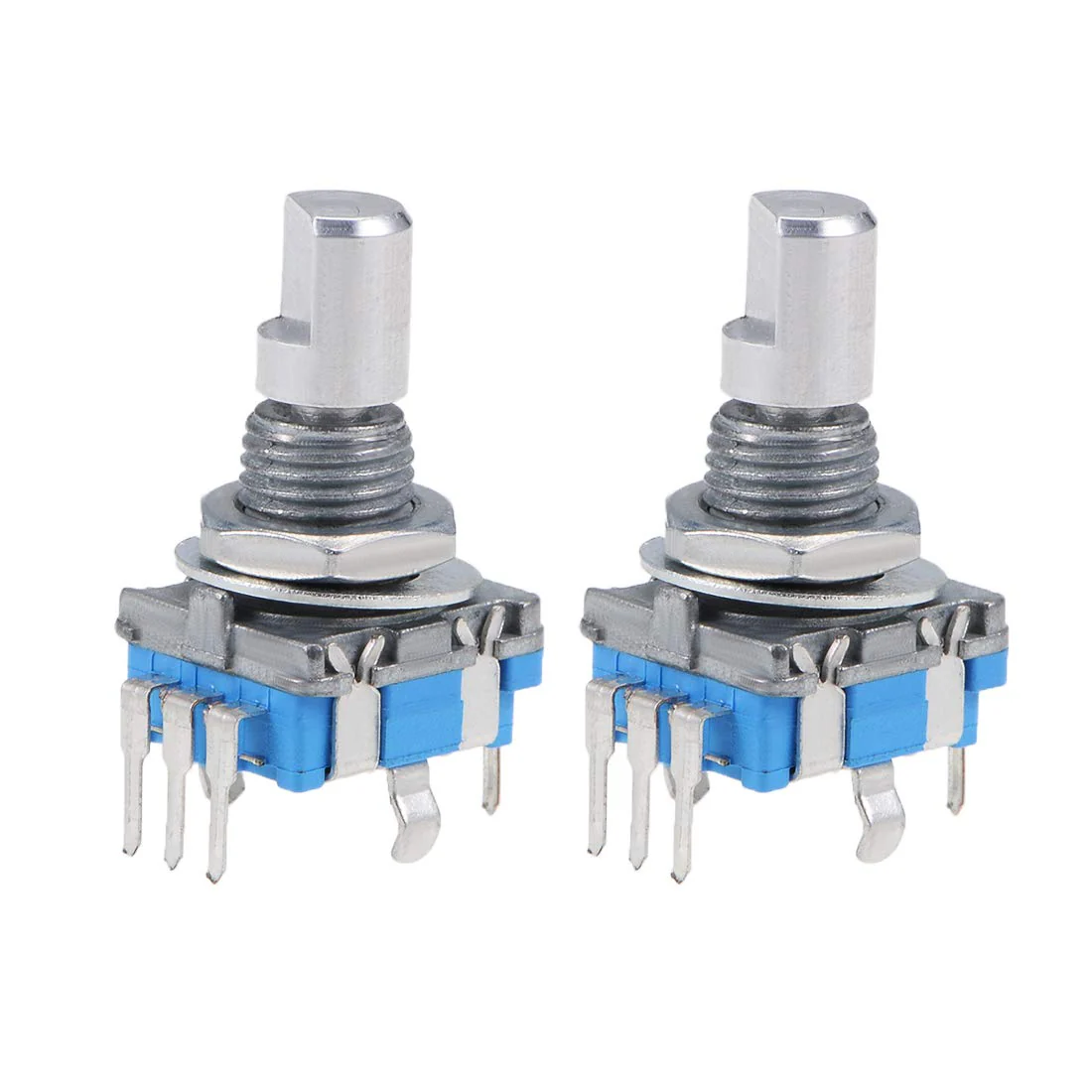
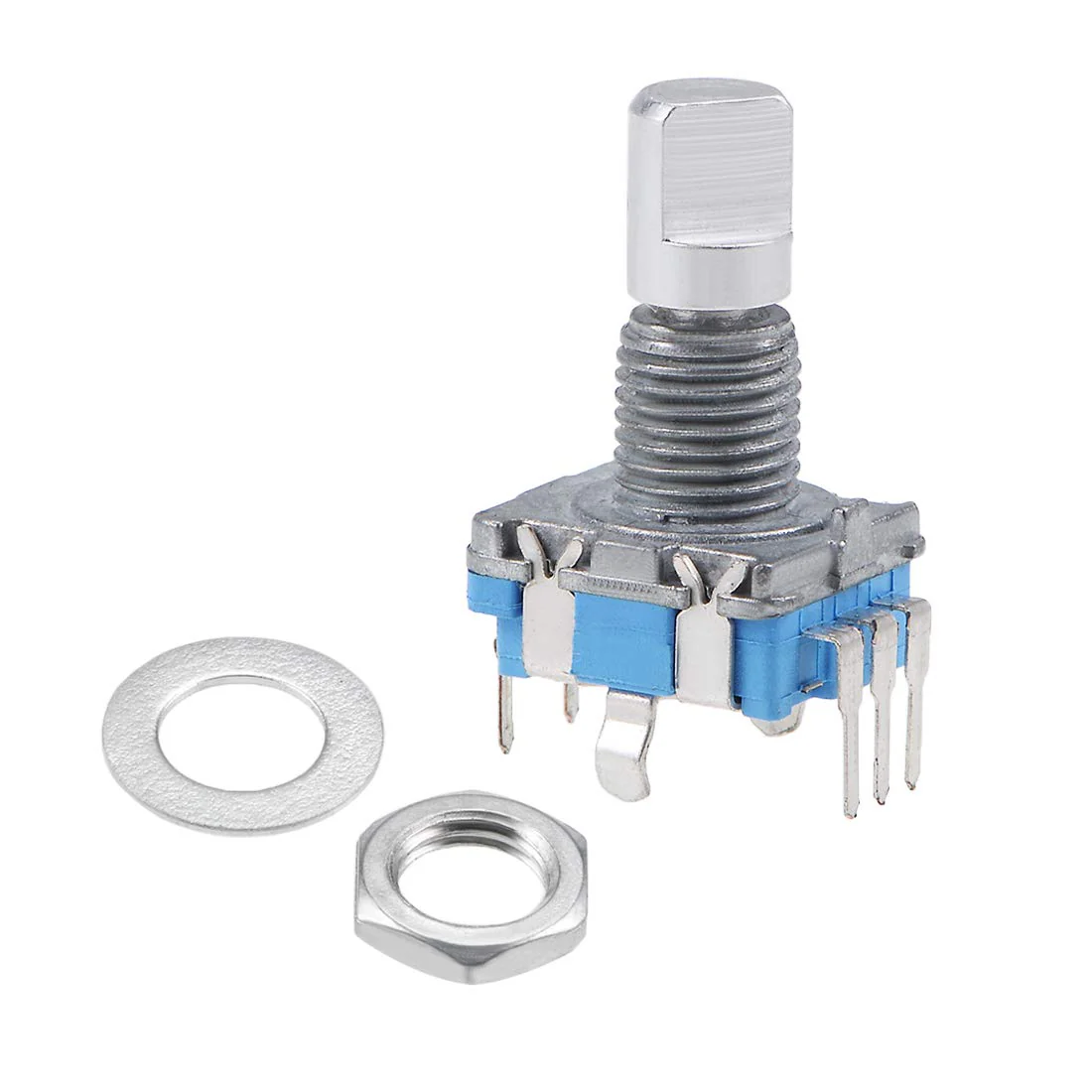
sourcing map 360 Degree Rotary Encoder Code Switch Digital EC11 7 Pins 15 mm D-Shaft Pack of 2
sourcing map 360 Degree Rotary Encoder Code Switch Digital EC11 7 Pins 15 mm D-Shaft Pack of 2
sourcing map 360 Degree Rotary Encoder Code Switch Digital EC11 7 Pins 15 mm D-Shaft Pack of 2
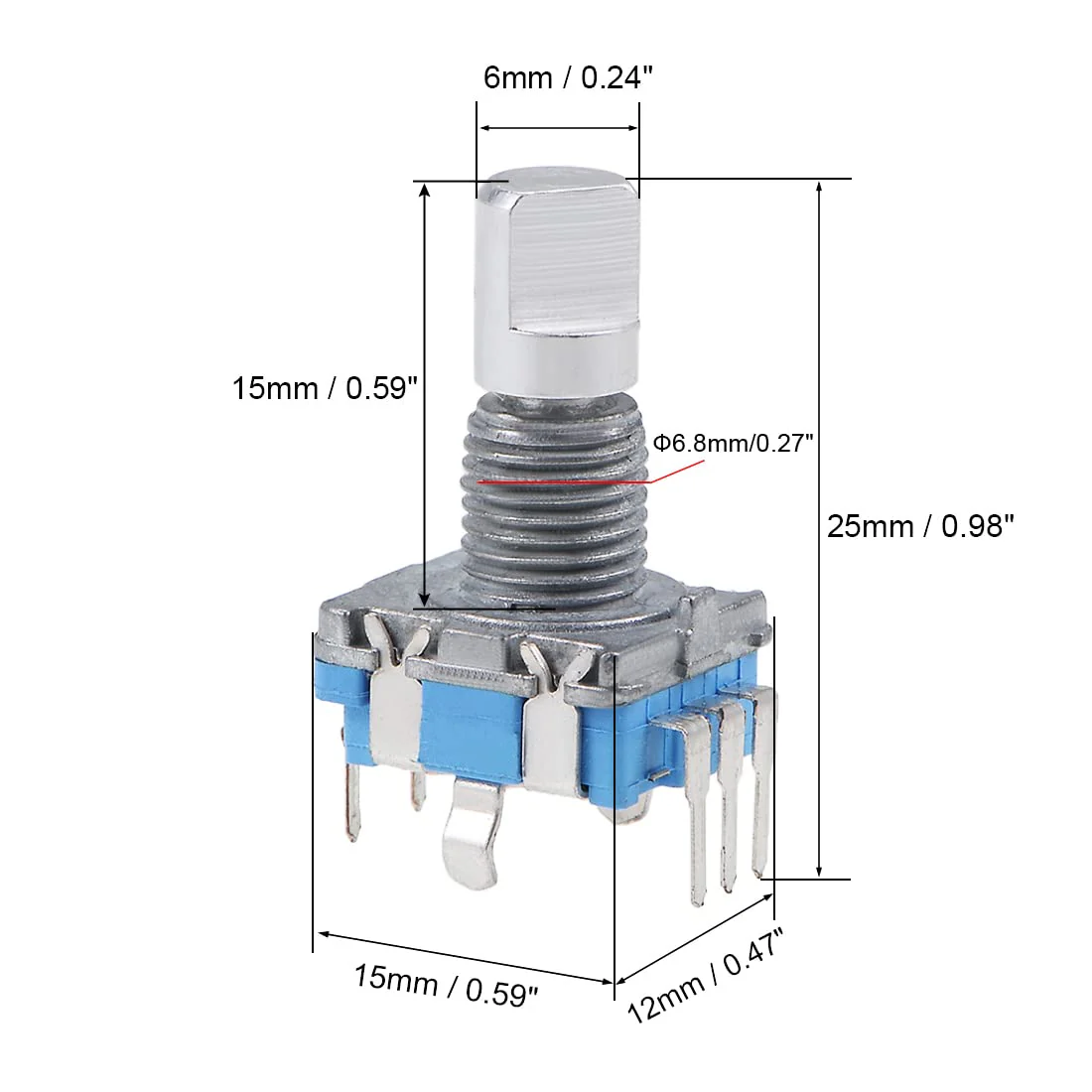
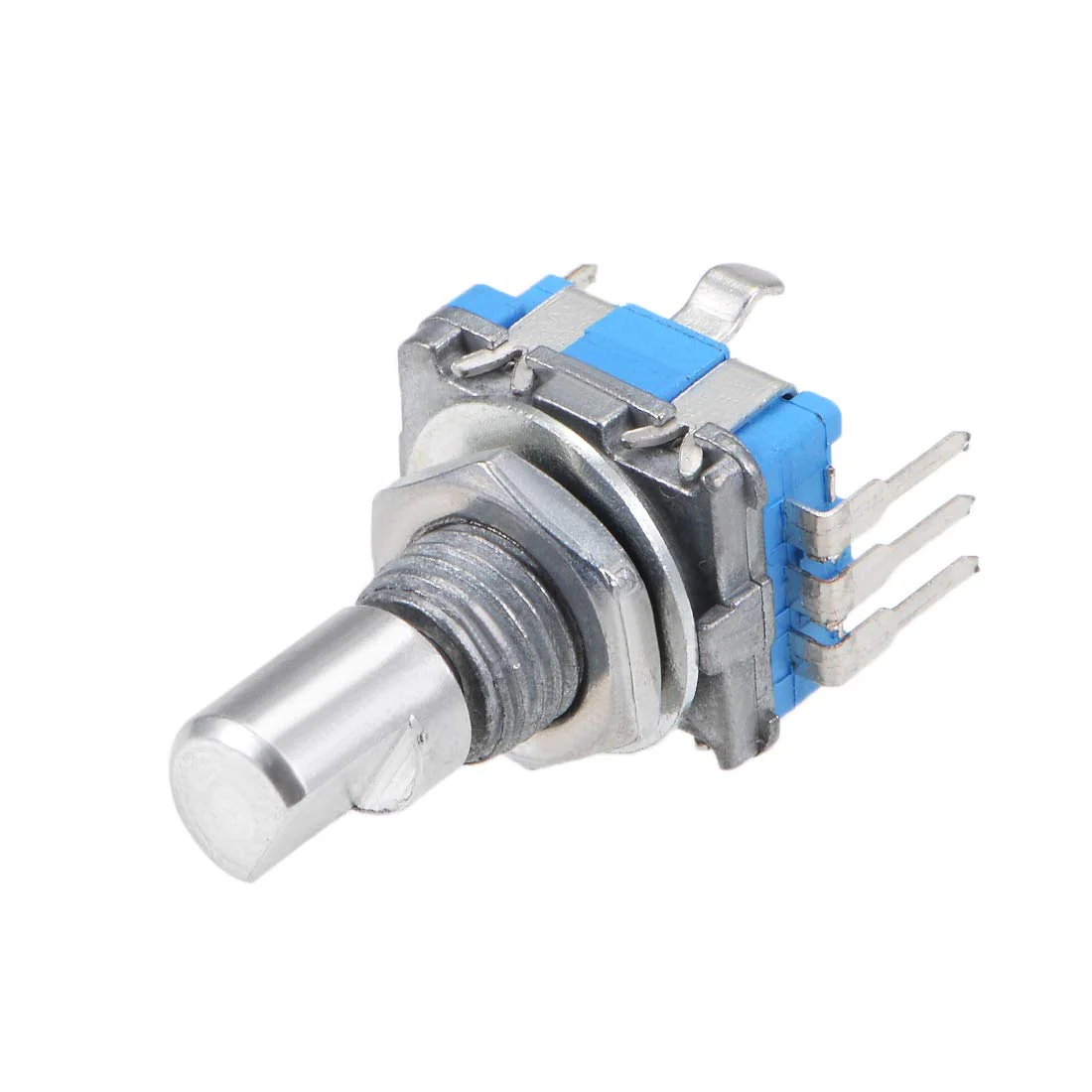
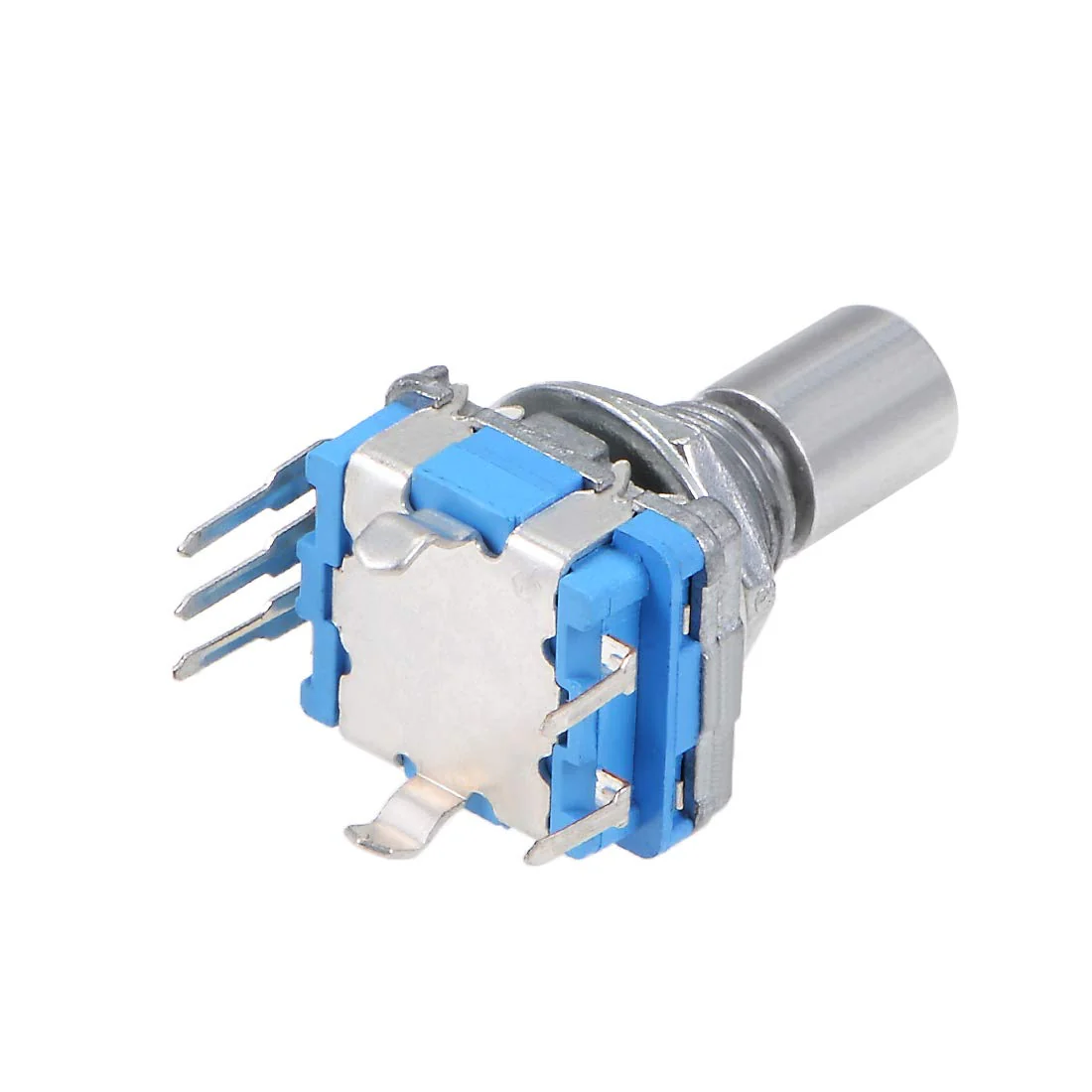
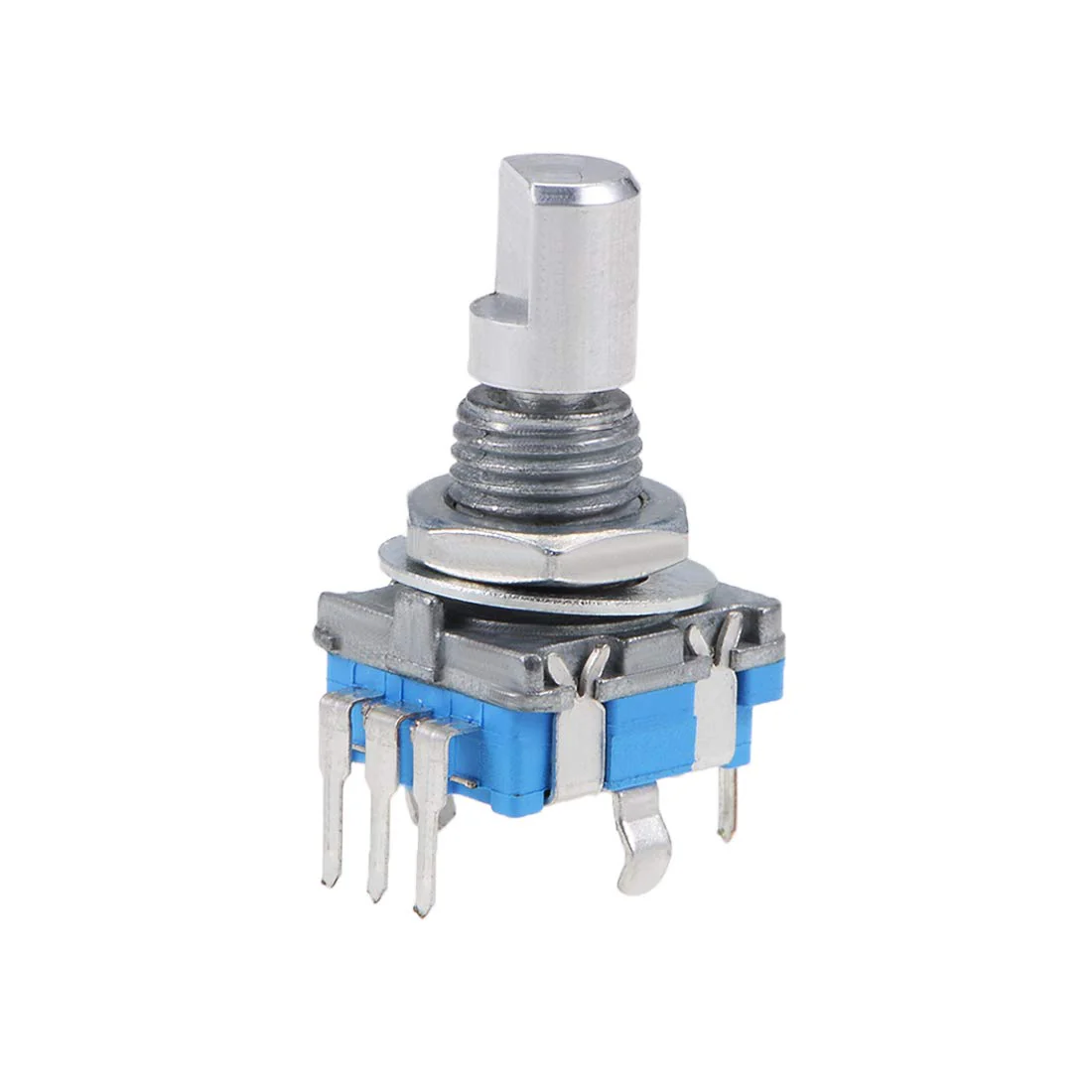
Description: A rotary encoder, also known as a rotary encoder, is an electromechanical device that converts the angular position or movement of a shaft or axis into digital output signals. Rotary encoders are used in a wide range of applications requiring the monitoring or control of mechanical systems, including industrial controls, robotics, photographic lenses, computer input devices such as optomechanical mice and trackballs, regulated voltage rometers. Specifications: Adjustment method: 360 degrees. Pin numbers: 7. Number of digits: 20 digits. Rated voltage: 5 volts Shaft type: D type Shaft diameter: 6 mm/0.24 inches. Shaft height: 15 mm/0.59 inches. Thread diameter: 6.8 mm/0.27 inches. Total size: 15 mm x 12 mm x 25 mm / 0.59 inches x 0.47 inches x 0.98 inches (L x W x H). Note: Do not store the products in places with high temperature, high humidity and corrosive gases. Do not touch the product with water, as this may cause unusual output waves.
Product Features
- Type: encoder code with switch; Adjustment method: 360 degree; Number of digits: 20 digits; PIN numbers: 7; Rated voltage: 5 volts; Shaft type: D type.
- Shaft diameter: 6 mm/0.24 inches; shaft height: 15 mm/0.59 inches; thread diameter: 6.8 mm/0.27 inches; total dimensions: 15 mm x 12 mm x 25 mm/0.59 inches x 0.47 inches x 0.98 inches (L x W x H).
- In the forward rotation, the A line phase leads the B line phase; in the reverse case, the B line phase leads the A line phase. The phase relationship and number of turns of AB can be identified using a simple digital logic circuit (exclusive OR gate and D flip-flop).
- By turning the rotary encoder can be counted in positive direction and reverse direction during rotation of the output pulse frequency, unlike rotary potentiometer counting, these speeds are not limited. With the buttons of the rotary encoder, it can be reset to the initial state, which starts to count from 0.
- Applications: industrial controls, robotics, photographic lenses, computer input devices such as optomechanical mice and trackballs, controlled load rheometers.
More Images
sourcing map 360 Degree Rotary Encoder Code Switch Digital EC11 7 Pins 15 mm D-Shaft Pack of 2
sourcing map 360 Degree Rotary Encoder Code Switch Digital EC11 7 Pins 15 mm D-Shaft Pack of 2
Description: A rotary encoder, also known as a rotary encoder, is an electromechanical device that converts the angular position or movement of a shaft or axis into digital output signals. Rotary encoders are used in a wide range of applications requiring the monitoring or control of mechanical systems, including industrial controls, robotics, photographic lenses, computer input devices such as optomechanical mice and trackballs, regulated voltage rometers. Specifications: Adjustment method: 360 degrees. Pin numbers: 7. Number of digits: 20 digits. Rated voltage: 5 volts Shaft type: D type Shaft diameter: 6 mm/0.24 inches. Shaft height: 15 mm/0.59 inches. Thread diameter: 6.8 mm/0.27 inches. Total size: 15 mm x 12 mm x 25 mm / 0.59 inches x 0.47 inches x 0.98 inches (L x W x H). Note: Do not store the products in places with high temperature, high humidity and corrosive gases. Do not touch the product with water, as this may cause unusual output waves.
Product Features
- Type: encoder code with switch; Adjustment method: 360 degree; Number of digits: 20 digits; PIN numbers: 7; Rated voltage: 5 volts; Shaft type: D type.
- Shaft diameter: 6 mm/0.24 inches; shaft height: 15 mm/0.59 inches; thread diameter: 6.8 mm/0.27 inches; total dimensions: 15 mm x 12 mm x 25 mm/0.59 inches x 0.47 inches x 0.98 inches (L x W x H).
- In the forward rotation, the A line phase leads the B line phase; in the reverse case, the B line phase leads the A line phase. The phase relationship and number of turns of AB can be identified using a simple digital logic circuit (exclusive OR gate and D flip-flop).
- By turning the rotary encoder can be counted in positive direction and reverse direction during rotation of the output pulse frequency, unlike rotary potentiometer counting, these speeds are not limited. With the buttons of the rotary encoder, it can be reset to the initial state, which starts to count from 0.
- Applications: industrial controls, robotics, photographic lenses, computer input devices such as optomechanical mice and trackballs, controlled load rheometers.
Product Information
Product Information
Shipping & Returns
Shipping & Returns
Description
sourcing map 360 Degree Rotary Encoder Code Switch Digital EC11 7 Pins 15 mm D-Shaft Pack of 2
Description: A rotary encoder, also known as a rotary encoder, is an electromechanical device that converts the angular position or movement of a shaft or axis into digital output signals. Rotary encoders are used in a wide range of applications requiring the monitoring or control of mechanical systems, including industrial controls, robotics, photographic lenses, computer input devices such as optomechanical mice and trackballs, regulated voltage rometers. Specifications: Adjustment method: 360 degrees. Pin numbers: 7. Number of digits: 20 digits. Rated voltage: 5 volts Shaft type: D type Shaft diameter: 6 mm/0.24 inches. Shaft height: 15 mm/0.59 inches. Thread diameter: 6.8 mm/0.27 inches. Total size: 15 mm x 12 mm x 25 mm / 0.59 inches x 0.47 inches x 0.98 inches (L x W x H). Note: Do not store the products in places with high temperature, high humidity and corrosive gases. Do not touch the product with water, as this may cause unusual output waves.
Product Features
- Type: encoder code with switch; Adjustment method: 360 degree; Number of digits: 20 digits; PIN numbers: 7; Rated voltage: 5 volts; Shaft type: D type.
- Shaft diameter: 6 mm/0.24 inches; shaft height: 15 mm/0.59 inches; thread diameter: 6.8 mm/0.27 inches; total dimensions: 15 mm x 12 mm x 25 mm/0.59 inches x 0.47 inches x 0.98 inches (L x W x H).
- In the forward rotation, the A line phase leads the B line phase; in the reverse case, the B line phase leads the A line phase. The phase relationship and number of turns of AB can be identified using a simple digital logic circuit (exclusive OR gate and D flip-flop).
- By turning the rotary encoder can be counted in positive direction and reverse direction during rotation of the output pulse frequency, unlike rotary potentiometer counting, these speeds are not limited. With the buttons of the rotary encoder, it can be reset to the initial state, which starts to count from 0.
- Applications: industrial controls, robotics, photographic lenses, computer input devices such as optomechanical mice and trackballs, controlled load rheometers.