Binghe ESP Relay 2-Channel Module, ESP-32 Relay Development Board with 4 MB Flash Dual WiFi DC5-60V Power Supply for Secondary Development Learning (LC-Relay-ESP32-2R-D5)
Binghe ESP Relay 2-Channel Module, ESP-32 Relay Development Board with 4 MB Flash Dual WiFi DC5-60V Power Supply for Secondary Development Learning (LC-Relay-ESP32-2R-D5)
Binghe ESP Relay 2-Channel Module, ESP-32 Relay Development Board with 4 MB Flash Dual WiFi DC5-60V Power Supply for Secondary Development Learning (LC-Relay-ESP32-2R-D5)
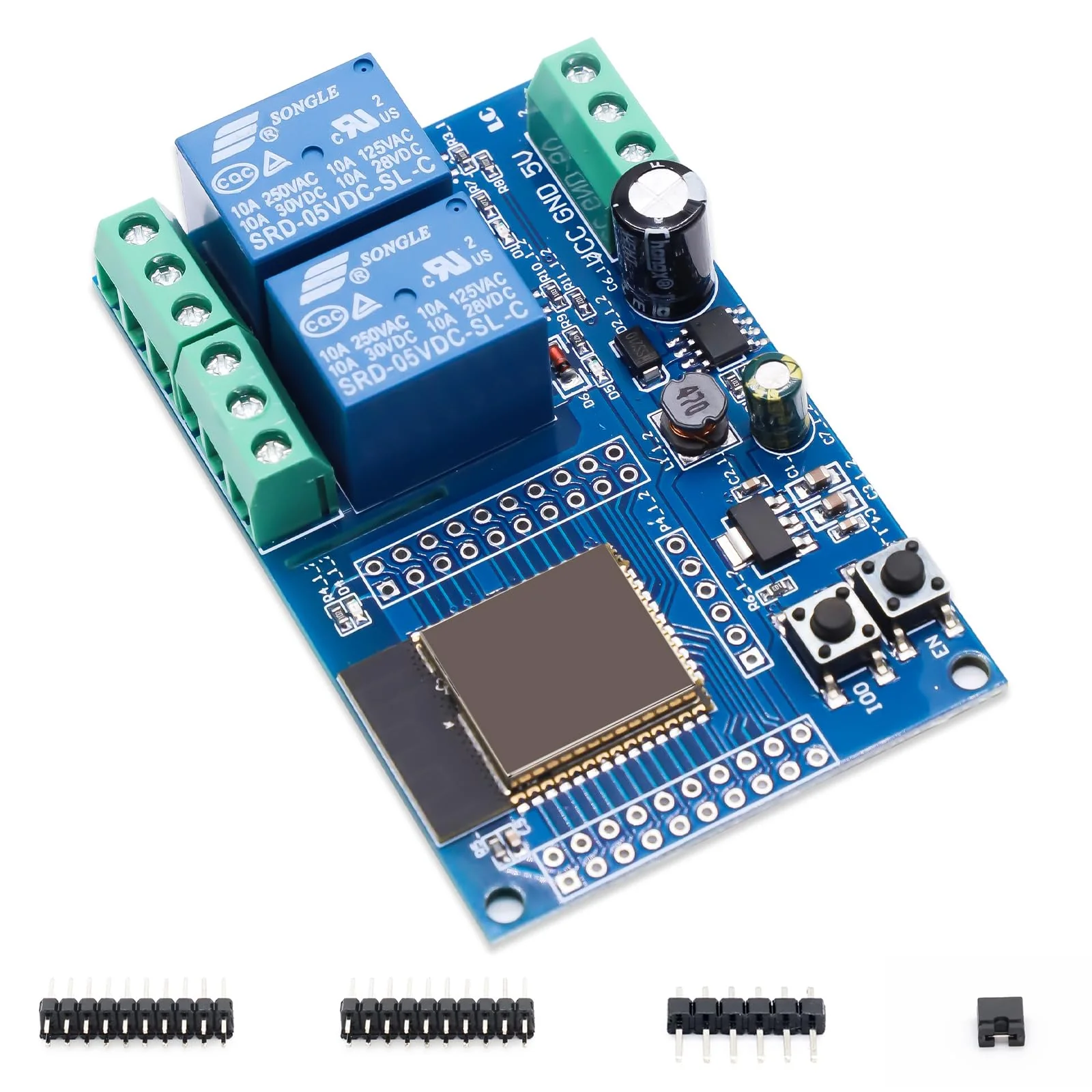
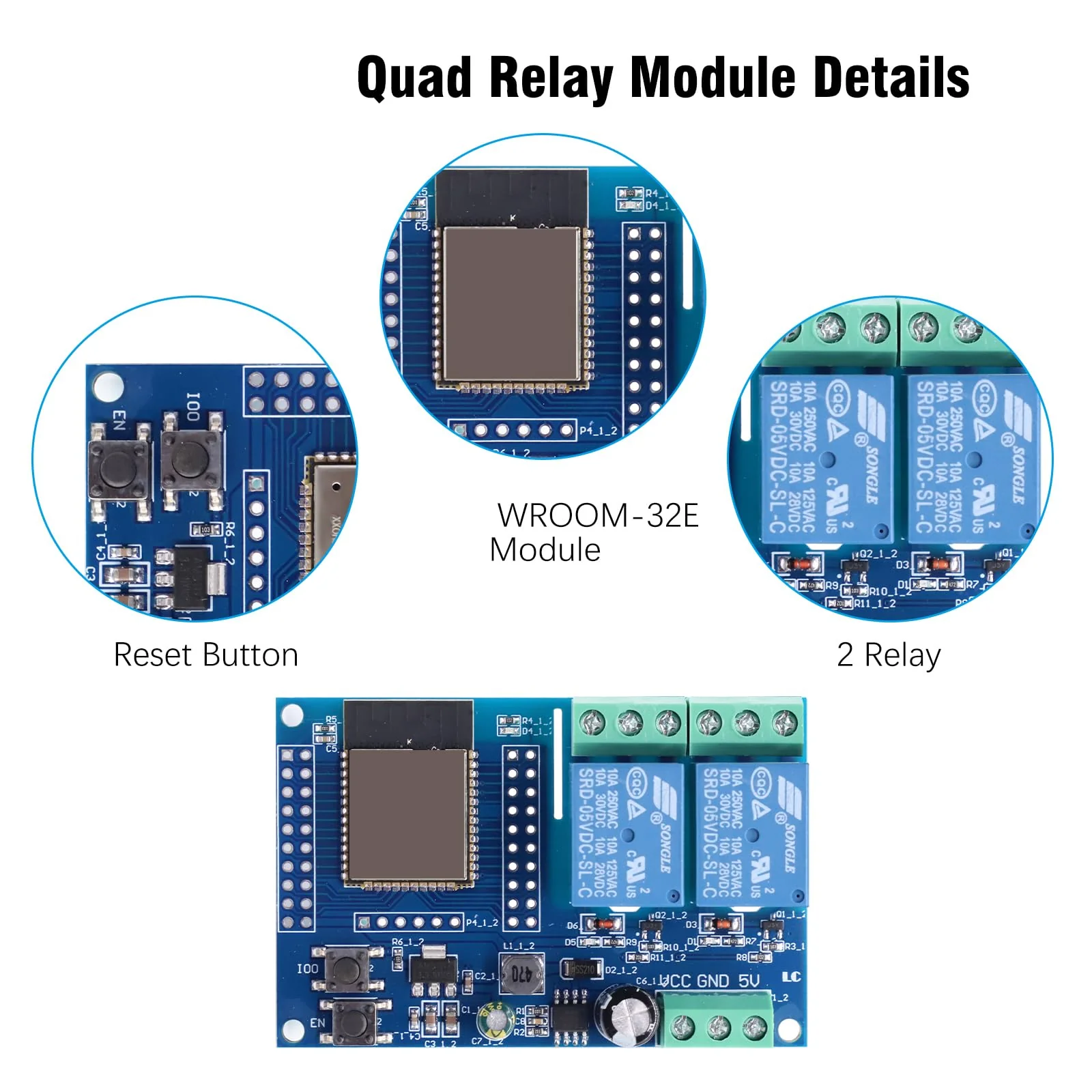
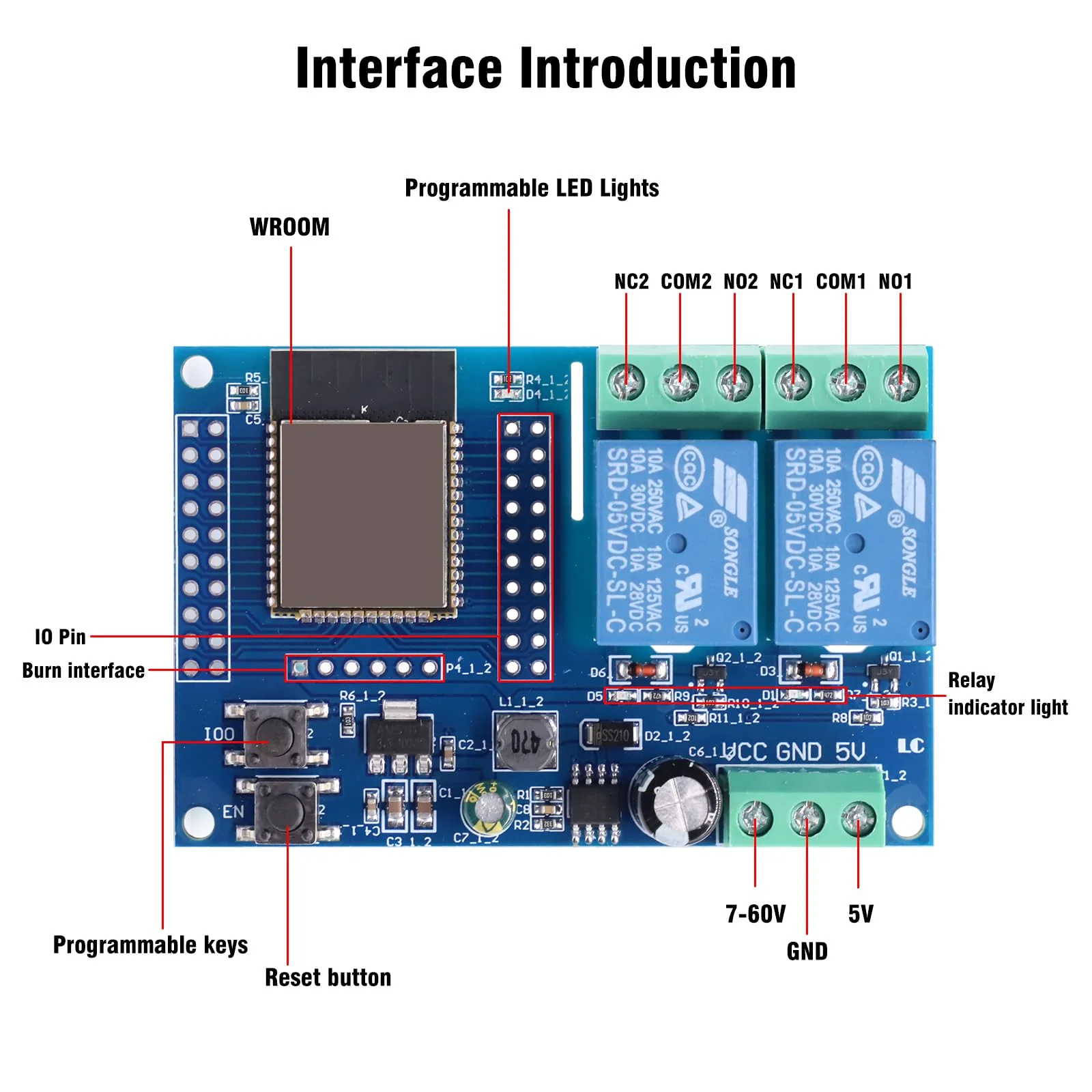
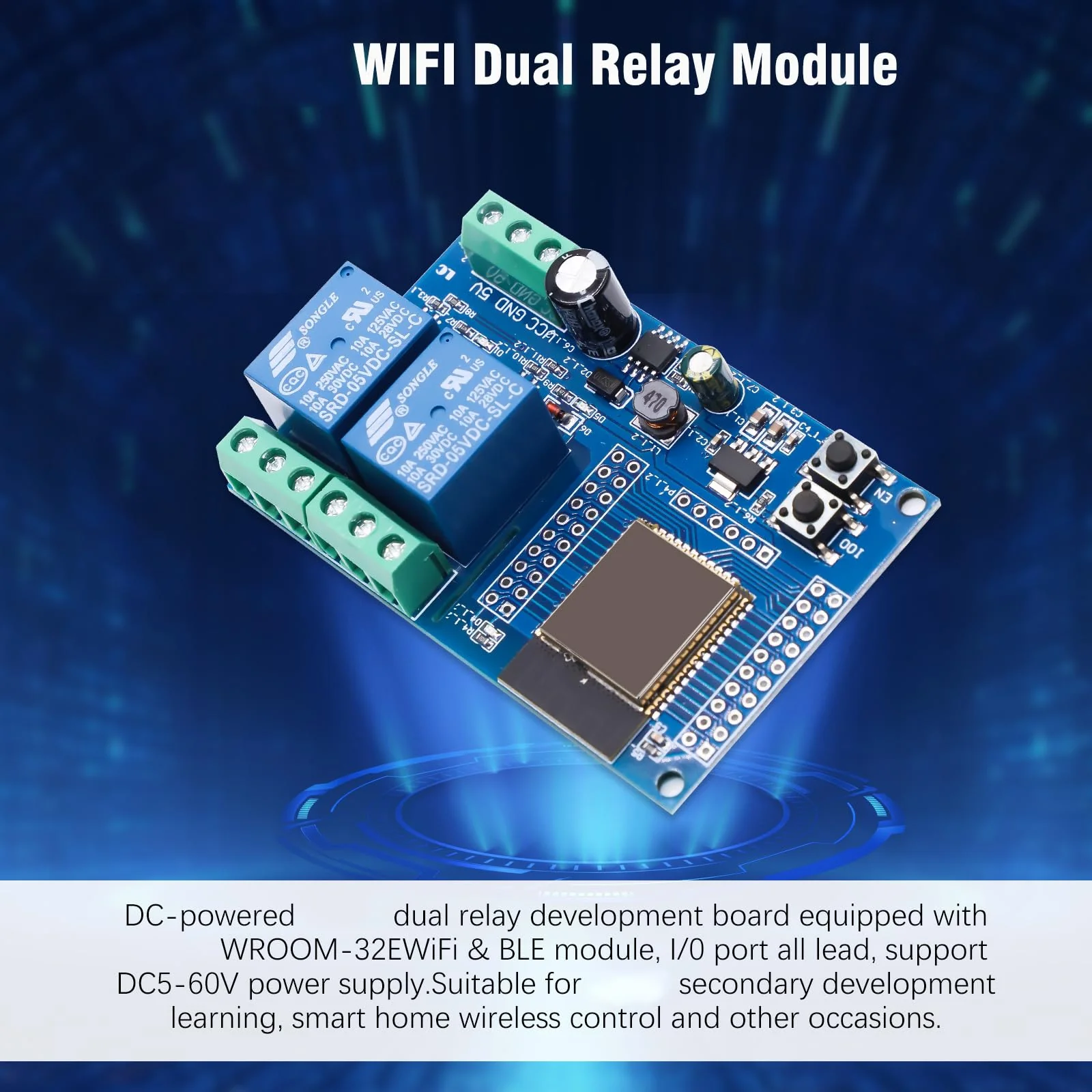
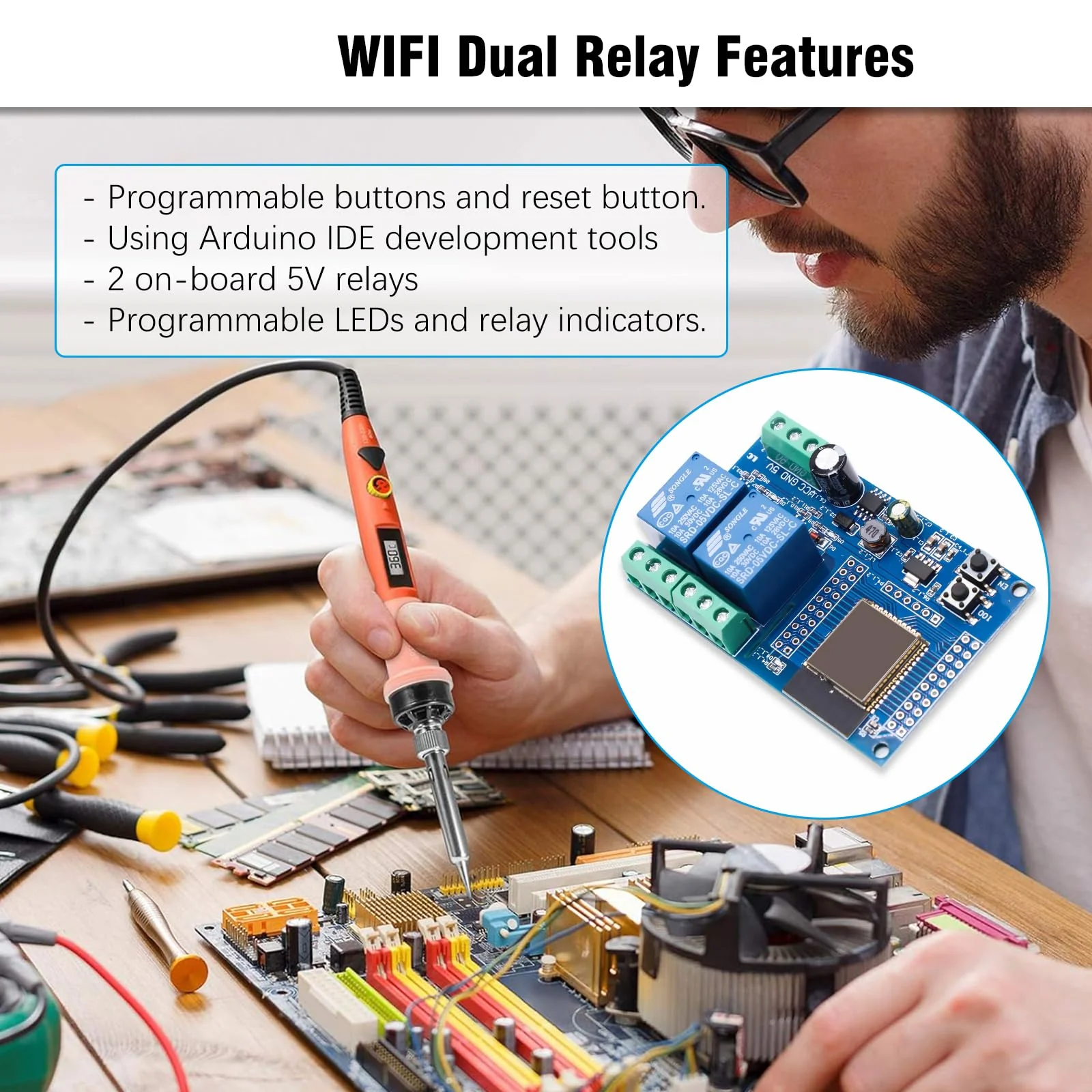
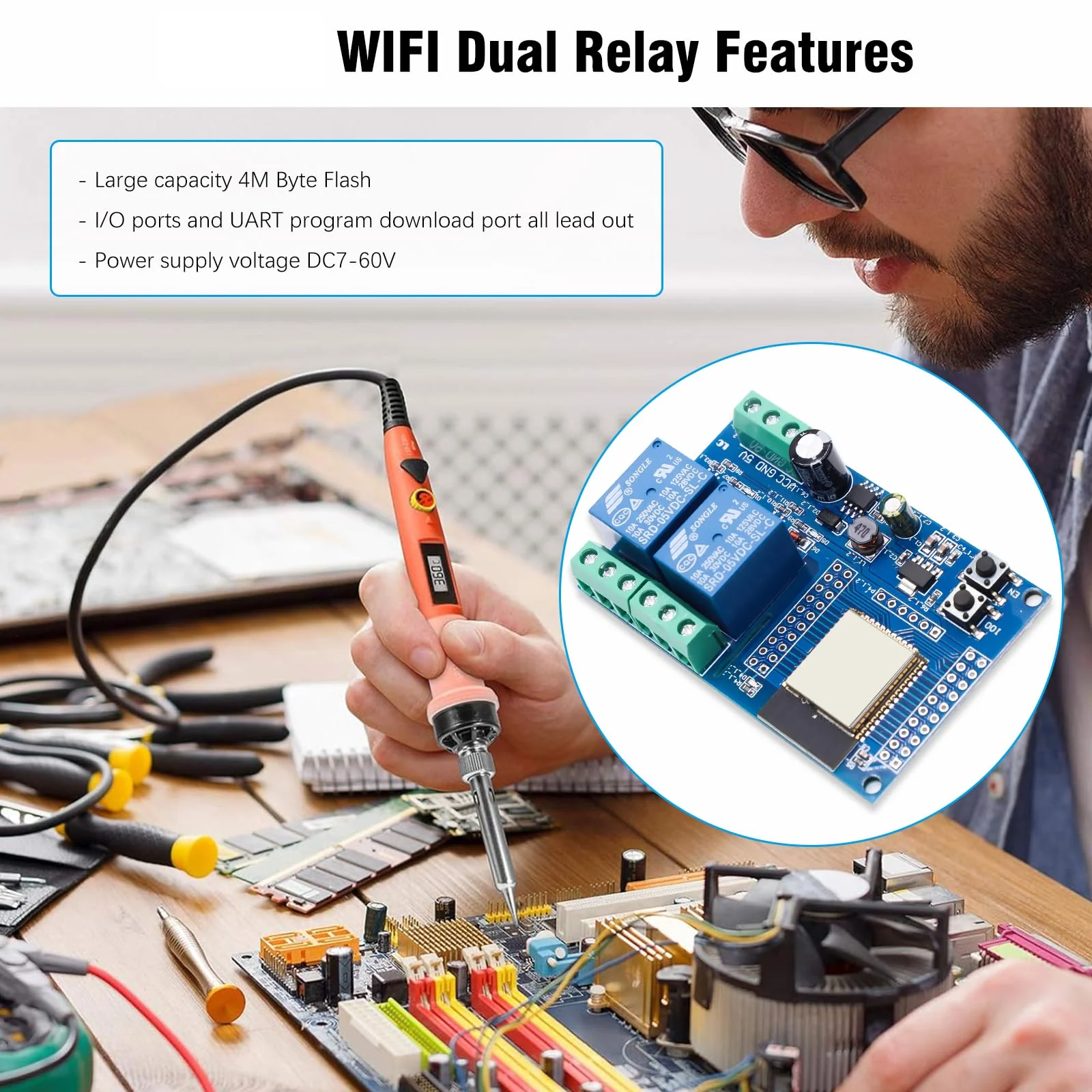
Description: ESP Relay Board Dual Channel WiFi Relay Module ESP-32 Development Board DC5-60V AC90-250V Arduino Power Supply ESP-32 Development Board DC5-60V Product sales point: 1:Wide range of applications 2:Small Size 3:Easy to use 4: Supports DC5-60V power supply. 5: It is suitable for ESP secondary development and learning, smart home wireless control and other occasions. Features: 1. Sophisticated and stable ESP-32-32E module, 4M byte flash with large capacity; 2. The I/O port and UART program download port of the ESP module are all out which is convenient for secondary development; 3. Power supply voltage DC7-60V; 4. Onboard ESP module IO0 programmable button and reset button. ESP supports the use of Arduino IDE development tools, providing reference programs in the Arduino development environment; 6. On-board 2-way 5V relay, output signal, suitable for controlling the load whose working voltage is within AC250V/DC30V; 1 programmable LED and relay indicator onboard. Package list: 1 x 2-channel ESP relay module. 2 x double-row needles. 1 x single row needle. 1 x single-breasted cap
Product Features
- Wide voltage input range: ESP relay development board supports DC5-60V power supply, suitable for different voltage requirements.
- Dual relay control: ESP relay module equipped with two independent relay channels that are able to control two different electrical devices at the same time.
- WiFi connectivity: uses the built-in WiFi module of the esp relay development board for wireless connection to the LAN or the Internet and allows remote control.
- Open development platform: based on the ESP-32 relay development board, supports secondary development for adjustment and expansion.
- Multiple interfaces: ESP relay module provides multiple GPIO interfaces for connecting other sensors or external devices and thus allows additional functionalities.
Original: $99.96
-65%$99.96
$34.99More Images
Binghe ESP Relay 2-Channel Module, ESP-32 Relay Development Board with 4 MB Flash Dual WiFi DC5-60V Power Supply for Secondary Development Learning (LC-Relay-ESP32-2R-D5)
Binghe ESP Relay 2-Channel Module, ESP-32 Relay Development Board with 4 MB Flash Dual WiFi DC5-60V Power Supply for Secondary Development Learning (LC-Relay-ESP32-2R-D5)
Description: ESP Relay Board Dual Channel WiFi Relay Module ESP-32 Development Board DC5-60V AC90-250V Arduino Power Supply ESP-32 Development Board DC5-60V Product sales point: 1:Wide range of applications 2:Small Size 3:Easy to use 4: Supports DC5-60V power supply. 5: It is suitable for ESP secondary development and learning, smart home wireless control and other occasions. Features: 1. Sophisticated and stable ESP-32-32E module, 4M byte flash with large capacity; 2. The I/O port and UART program download port of the ESP module are all out which is convenient for secondary development; 3. Power supply voltage DC7-60V; 4. Onboard ESP module IO0 programmable button and reset button. ESP supports the use of Arduino IDE development tools, providing reference programs in the Arduino development environment; 6. On-board 2-way 5V relay, output signal, suitable for controlling the load whose working voltage is within AC250V/DC30V; 1 programmable LED and relay indicator onboard. Package list: 1 x 2-channel ESP relay module. 2 x double-row needles. 1 x single row needle. 1 x single-breasted cap
Product Features
- Wide voltage input range: ESP relay development board supports DC5-60V power supply, suitable for different voltage requirements.
- Dual relay control: ESP relay module equipped with two independent relay channels that are able to control two different electrical devices at the same time.
- WiFi connectivity: uses the built-in WiFi module of the esp relay development board for wireless connection to the LAN or the Internet and allows remote control.
- Open development platform: based on the ESP-32 relay development board, supports secondary development for adjustment and expansion.
- Multiple interfaces: ESP relay module provides multiple GPIO interfaces for connecting other sensors or external devices and thus allows additional functionalities.
Product Information
Product Information
Shipping & Returns
Shipping & Returns
Description
Binghe ESP Relay 2-Channel Module, ESP-32 Relay Development Board with 4 MB Flash Dual WiFi DC5-60V Power Supply for Secondary Development Learning (LC-Relay-ESP32-2R-D5)
Description: ESP Relay Board Dual Channel WiFi Relay Module ESP-32 Development Board DC5-60V AC90-250V Arduino Power Supply ESP-32 Development Board DC5-60V Product sales point: 1:Wide range of applications 2:Small Size 3:Easy to use 4: Supports DC5-60V power supply. 5: It is suitable for ESP secondary development and learning, smart home wireless control and other occasions. Features: 1. Sophisticated and stable ESP-32-32E module, 4M byte flash with large capacity; 2. The I/O port and UART program download port of the ESP module are all out which is convenient for secondary development; 3. Power supply voltage DC7-60V; 4. Onboard ESP module IO0 programmable button and reset button. ESP supports the use of Arduino IDE development tools, providing reference programs in the Arduino development environment; 6. On-board 2-way 5V relay, output signal, suitable for controlling the load whose working voltage is within AC250V/DC30V; 1 programmable LED and relay indicator onboard. Package list: 1 x 2-channel ESP relay module. 2 x double-row needles. 1 x single row needle. 1 x single-breasted cap
Product Features
- Wide voltage input range: ESP relay development board supports DC5-60V power supply, suitable for different voltage requirements.
- Dual relay control: ESP relay module equipped with two independent relay channels that are able to control two different electrical devices at the same time.
- WiFi connectivity: uses the built-in WiFi module of the esp relay development board for wireless connection to the LAN or the Internet and allows remote control.
- Open development platform: based on the ESP-32 relay development board, supports secondary development for adjustment and expansion.
- Multiple interfaces: ESP relay module provides multiple GPIO interfaces for connecting other sensors or external devices and thus allows additional functionalities.